
ShieldMatter provides custom shielding solutions based on material properties, geometry, and application-specific requirements.

Understanding Radiation Types
Radiation shielding is essential in environments where ionizing radiation interacts with matter and biological tissue. Effective shielding requires understanding the type of radiation, its energy, and how it interacts with materials..
Radiation encountered in industrial, medical, and research environments typically includes
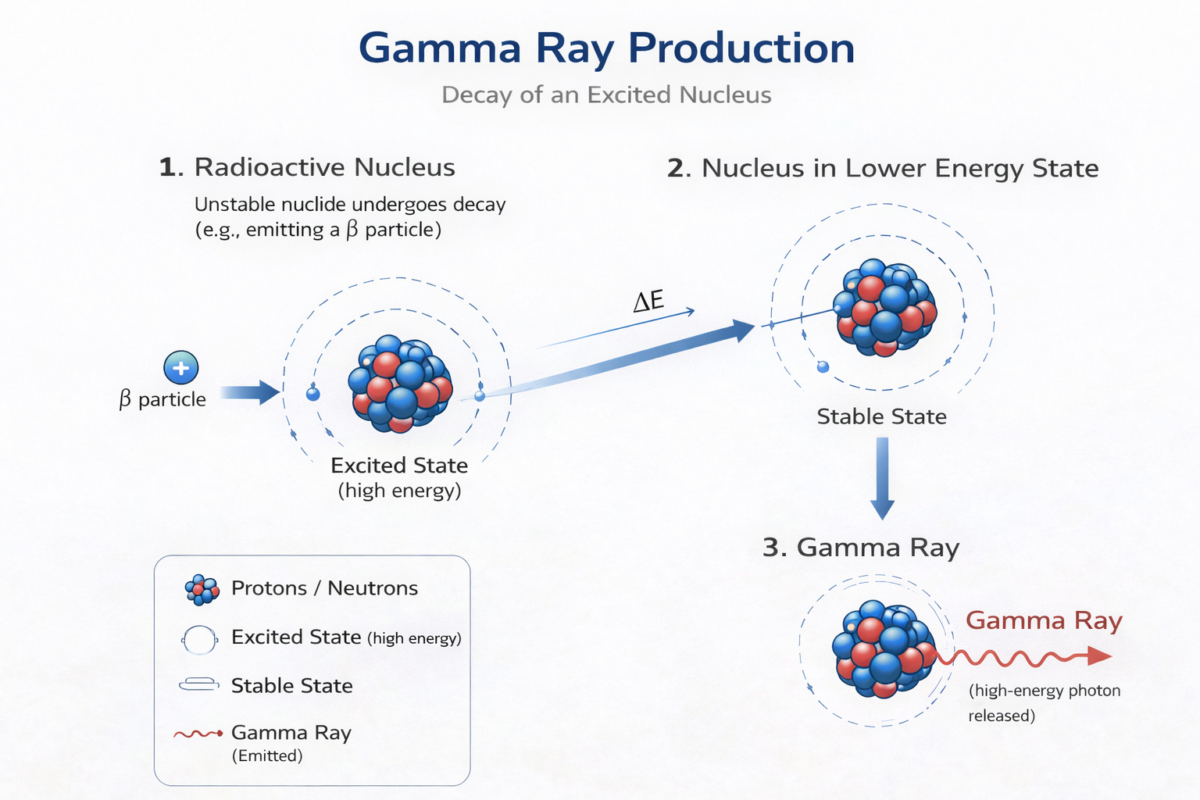
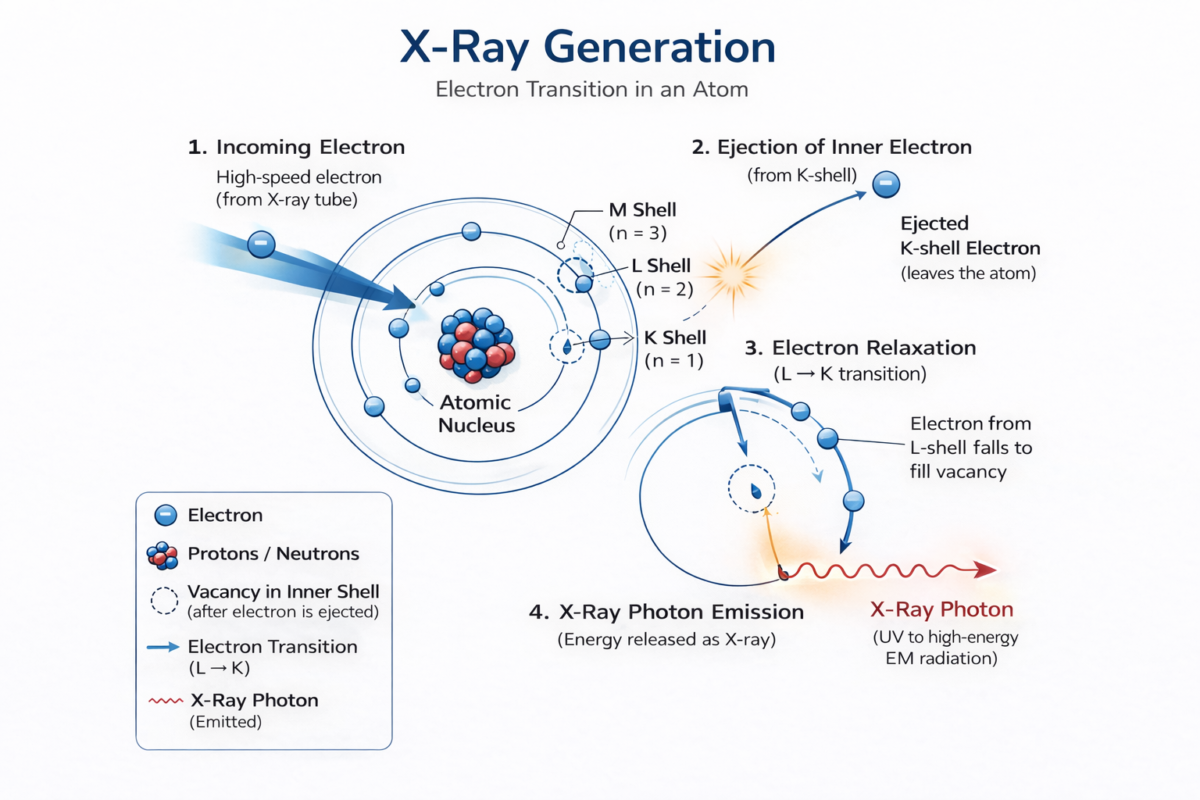
Gamma radiation originates from the relaxation of an atomic nucleus. It carries high energy and is difficult to attenuate, allowing it to penetrate deeply into materials and biological tissue, where it can cause DNA damage. It is commonly encountered in nuclear decay, medical imaging, and industrial radiography. X-rays have lower energy than gamma rays and are typically generated through electron transitions or deceleration within an atom. Although less energetic, prolonged exposure can still lead to significant biological damage, including DNA disruption. Both X-rays and gamma rays can be effectively attenuated using high atomic number (high-Z) materials such as lead (Pb) and tungsten (W).
ShieldMatter develops radiation shielding solutions by integrating material selection, physics-driven design, and application-specific requirements.
Materials
We utilize high-performance materials based on radiation type and energy:
Tungsten for gamma and X-ray attenuation due to its high atomic number and density
Boron carbide for neutron absorption through efficient capture reactions
Composite systems combining metals and ceramics for optimized performance and geometry
Material selection is determined by attenuation requirements, structural needs, and fabrication constraints.
Engineering Approach
Our shielding designs are guided by:
Energy-dependent attenuation behavior
Radiation type (photon vs neutron)
Geometry optimization for performance and efficiency
Integration with fabrication methods such as additive manufacturing and sintering
Rather than relying on standard thickness values, each solution is tailored to the specific application.
Applications
Our shielding solutions are used in:
Medical imaging prototyping
Nuclear and research environments
Industrial radiography systems
Detector shielding and collimation
Laboratory radiation protection setups
Custom Solutions
Every shielding requirement is unique. We work with clients to define the appropriate material, geometry, and fabrication method based on their specific environment and performance targets.
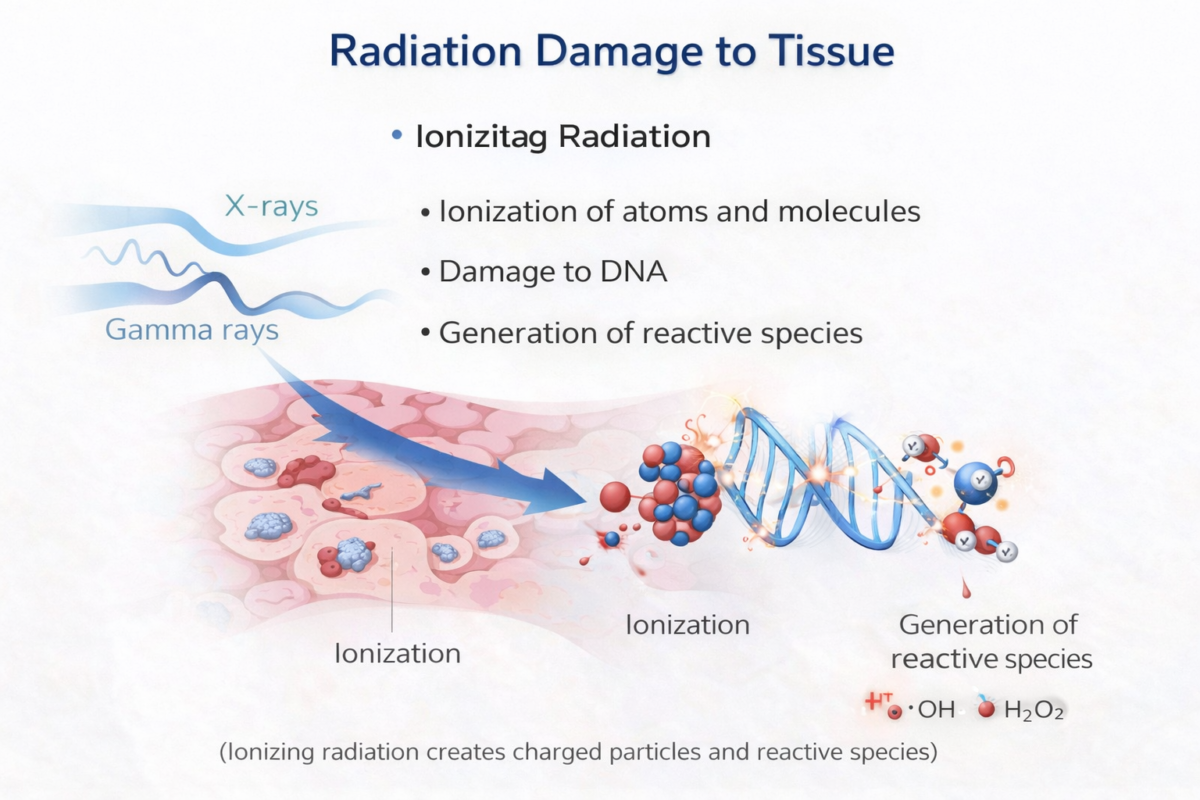
Interaction with Biological Tissue
Ionizing radiation interacts with living tissue primarily by:
- Ionizing atoms and molecules
- Damaging DNA structures
- Generating secondary electrons and reactive species
Shielding is used to reduce exposure and limit these interactions.
Principles of Radiation Shielding
Effective shielding depends on:
- Radiation type (photon vs neutron)
- Energy level (keV / MeV range)
- Material density and atomic number
- Shield thickness and geometry
Photon Shielding (Gamma / X-Ray)
- High atomic number (Z) materials are most effective
- Attenuation occurs via photoelectric effect, Compton scattering, and pair production
Typical materials:
- Tungsten
- Dense metal composites
Neutron
Shielding
- Neutrons interact differently than photons
- Materials rich in light nuclei slow neutrons (moderation)
- Boron is highly effective for neutron absorption
Typical materials:
- Boron carbide
- Hydrogen-rich composites